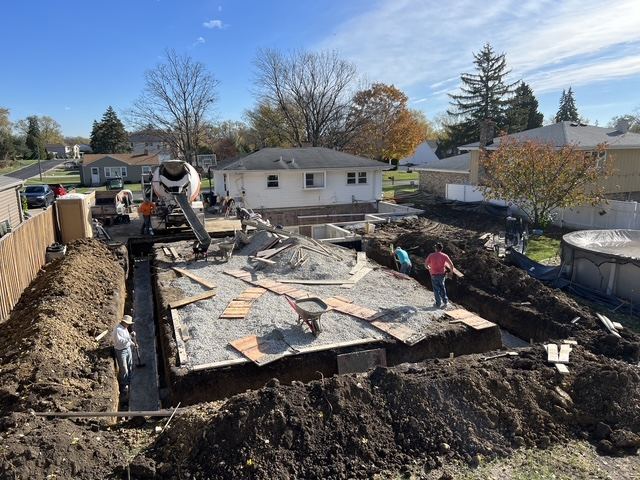
Room addition foundation in Wheaton
A great room on the back of a brick colonial, dug the week of Thanksgiving and poured in December with snow on the ground. Cold weather does not stop a foundation. It changes how you pour one.
The job
De Groot Construction is one of Abel's top builders. The addition is a one story great room with vaulted ceilings, so the walls sit tall, off the back and side of a brick colonial beside the sunroom. There was an old brick paver patio where it goes. Abel demoed it, hauled it out, and then poured a full footing and foundation wall for the great room.
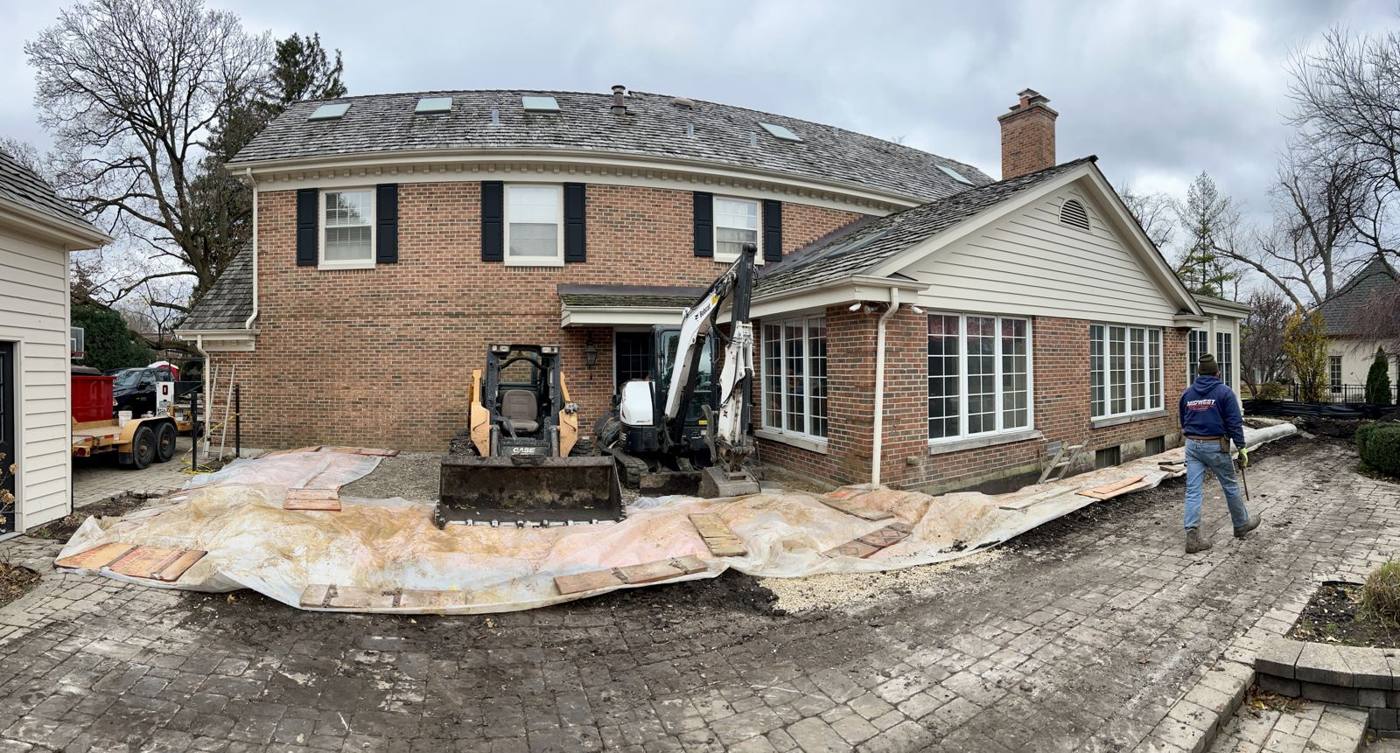 Before · Nov 26
What made it hard
Two things. The first was the calendar. The dig started the week of Thanksgiving, and by the time the footings were ready on December 8th there was snow on the ground. Concrete that freezes before it cures loses strength, and nobody finds out until something cracks.
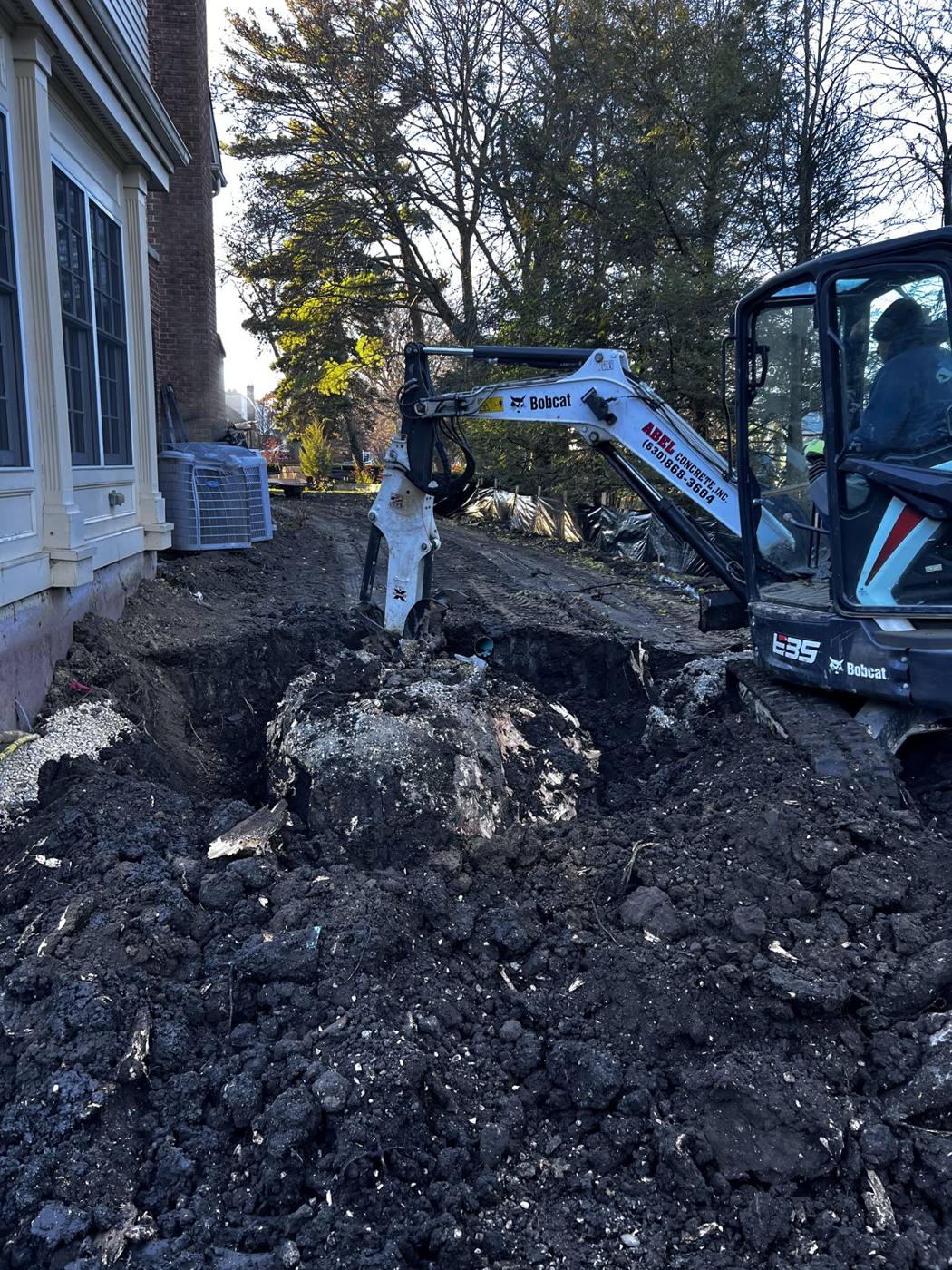
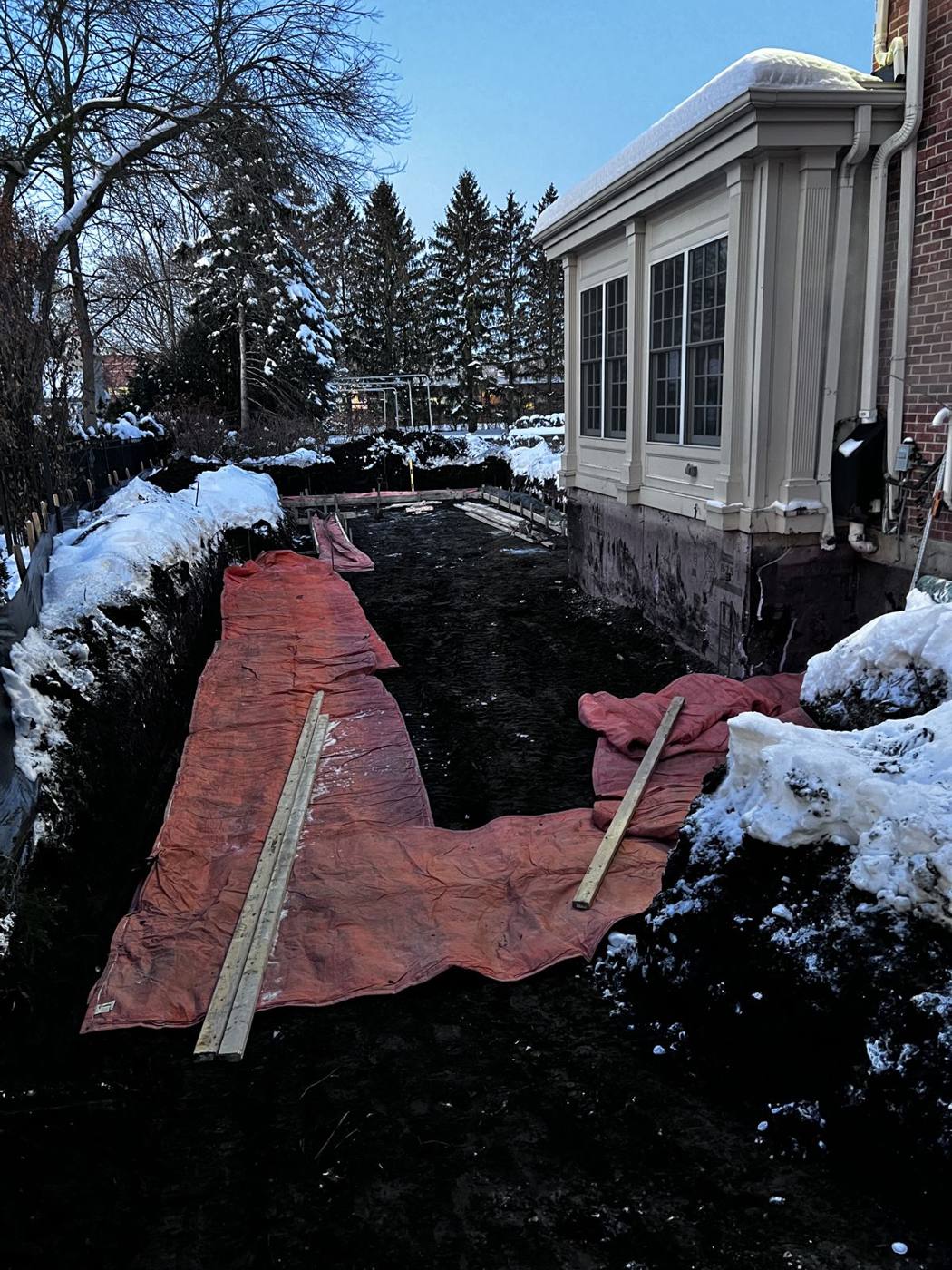
The second was the layout. The addition is big and it wraps in different spots across the back and side of the house. That made it hard to get the tractor and the other equipment to every part of it. So the walls went in by pump truck, with the boom reaching over the house from the street.
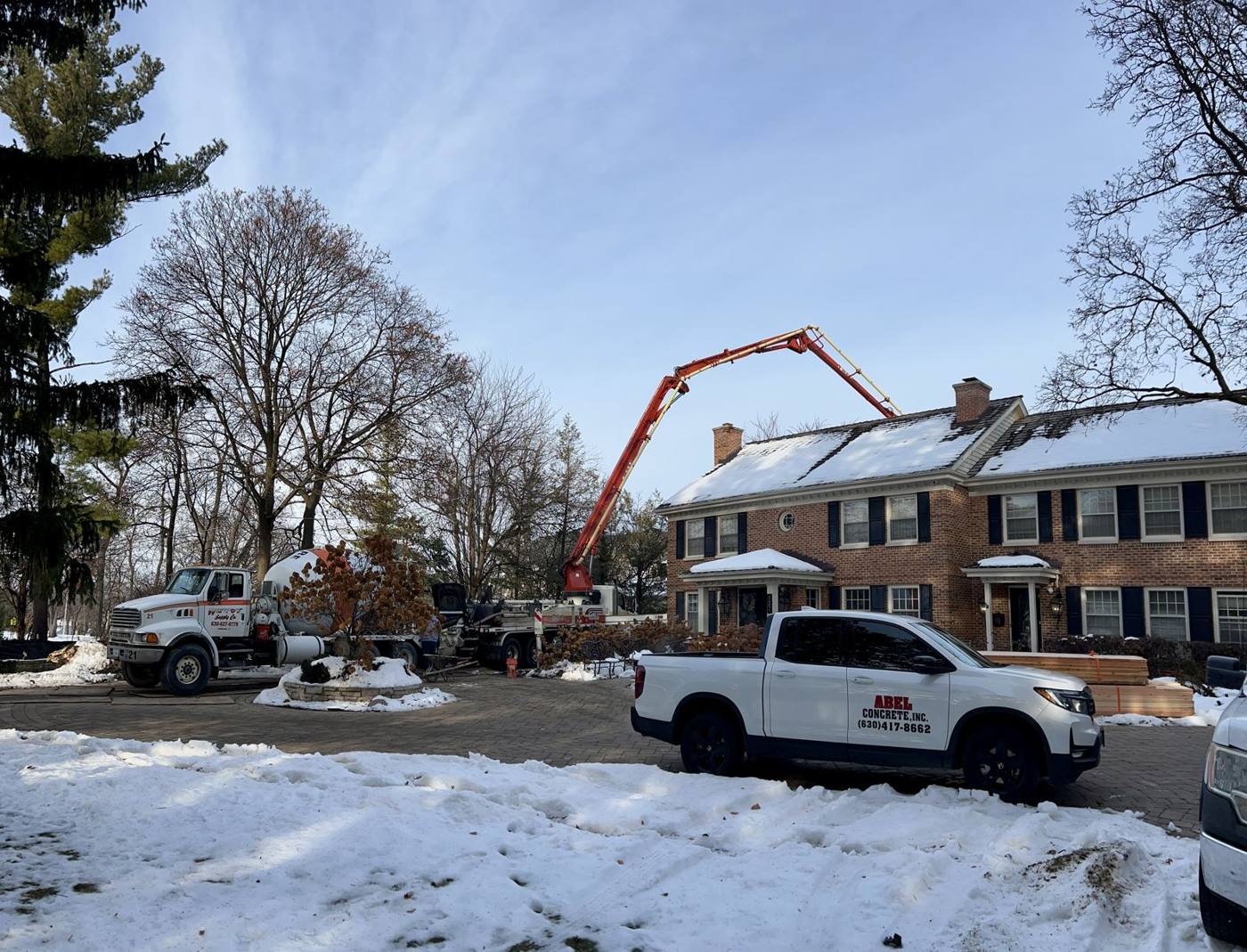
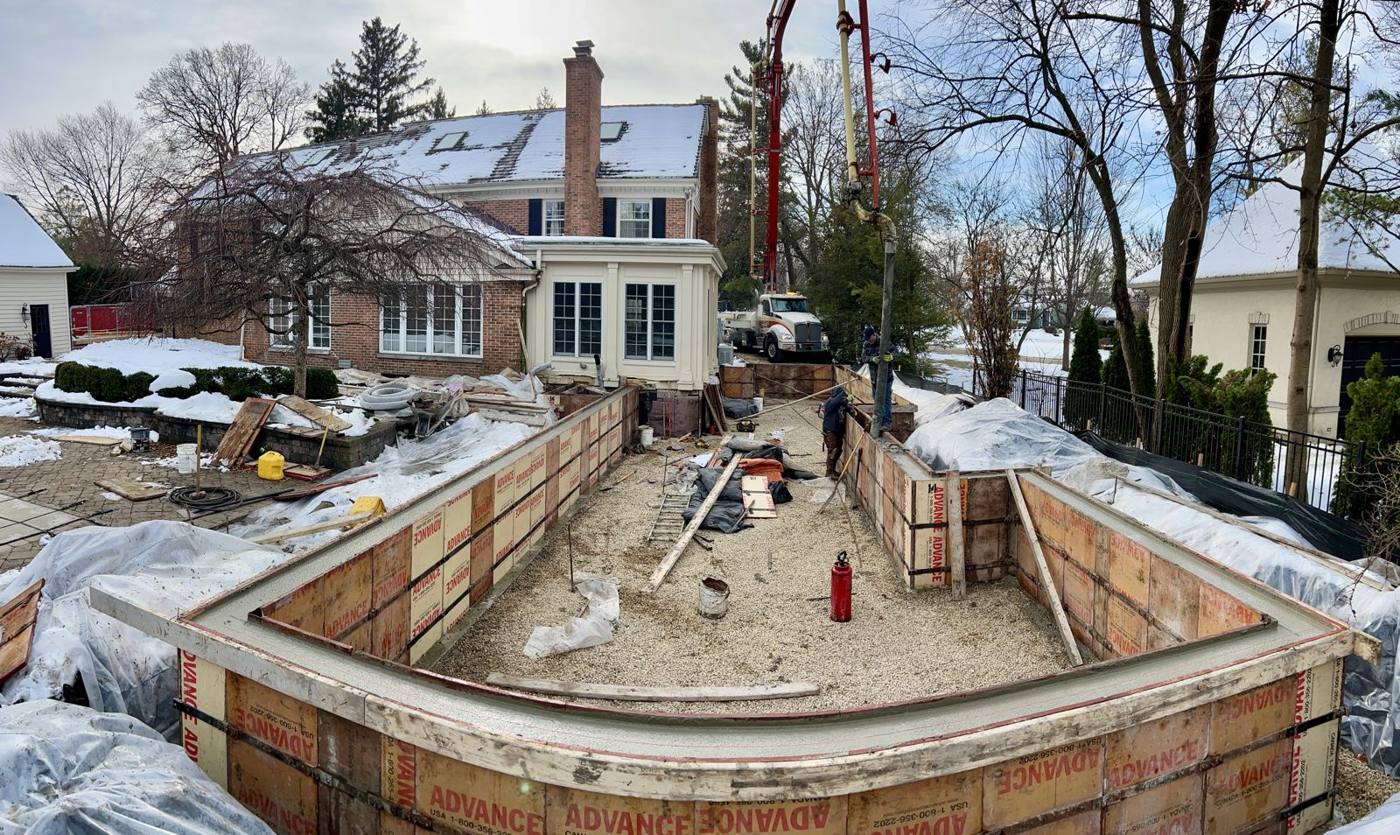
How we did it
The old patio came out first. Plastic and boards went down over the pavers that stayed, so the equipment never touched them.
Once the footings were poured, insulated blankets went over them and into the trenches to keep the ground from freezing. The blankets went back over the concrete after every pour. Cold or not, the concrete had to cure right.
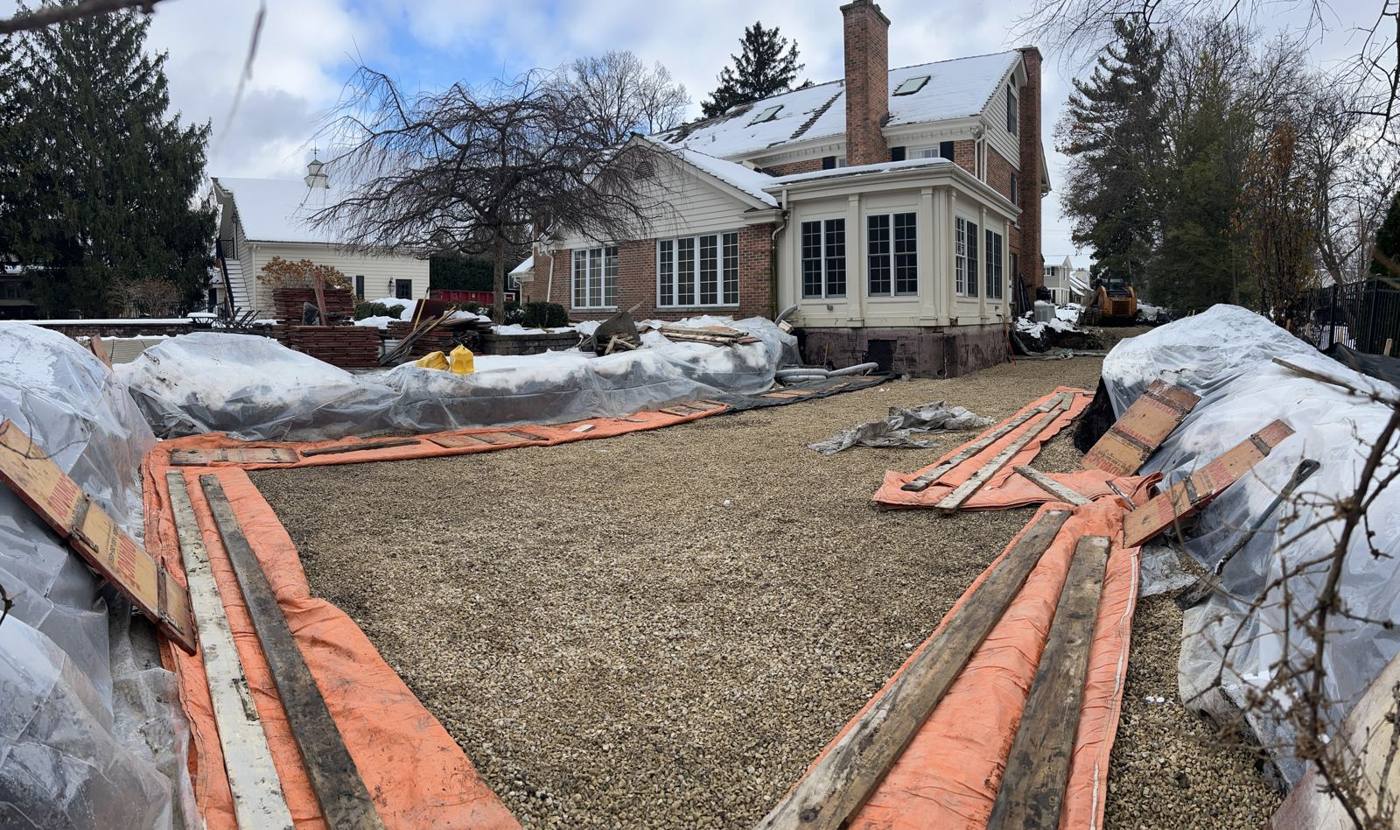
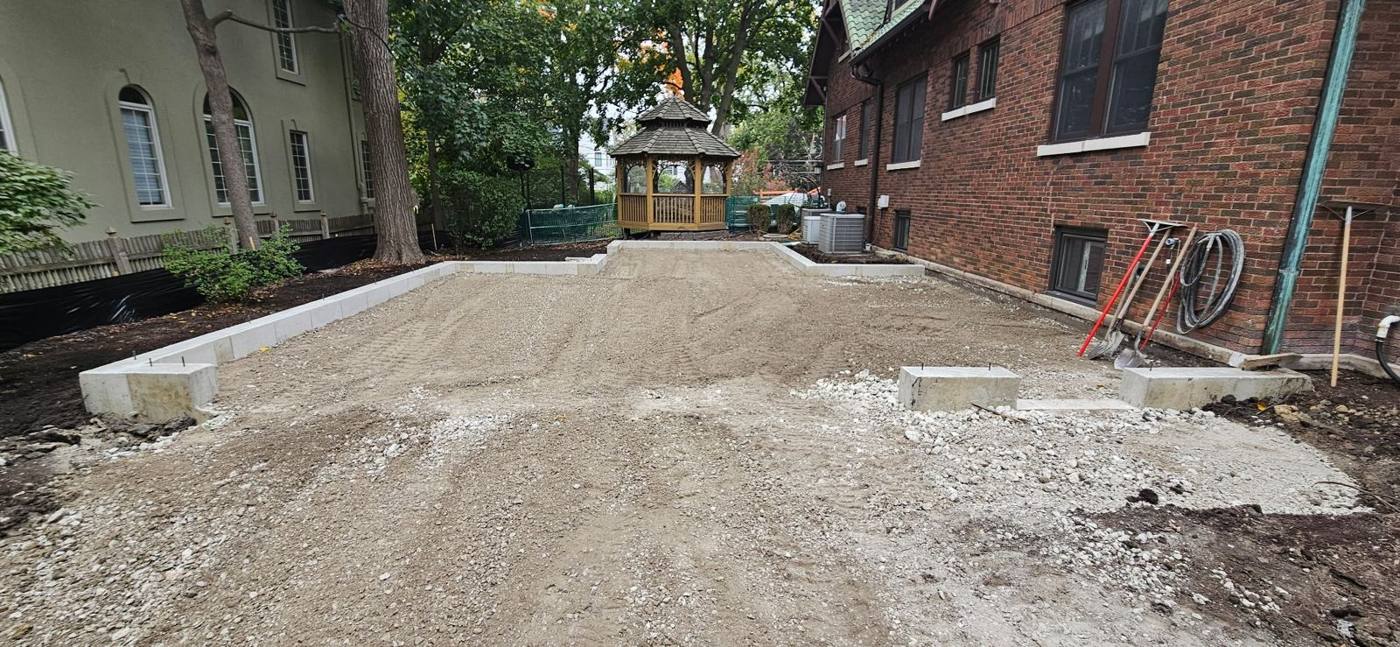
The gravel base was spread and leveled inside the footings. The walls went in by pump on December 17th, and they got damp proofing before the backfill.
What the builder got
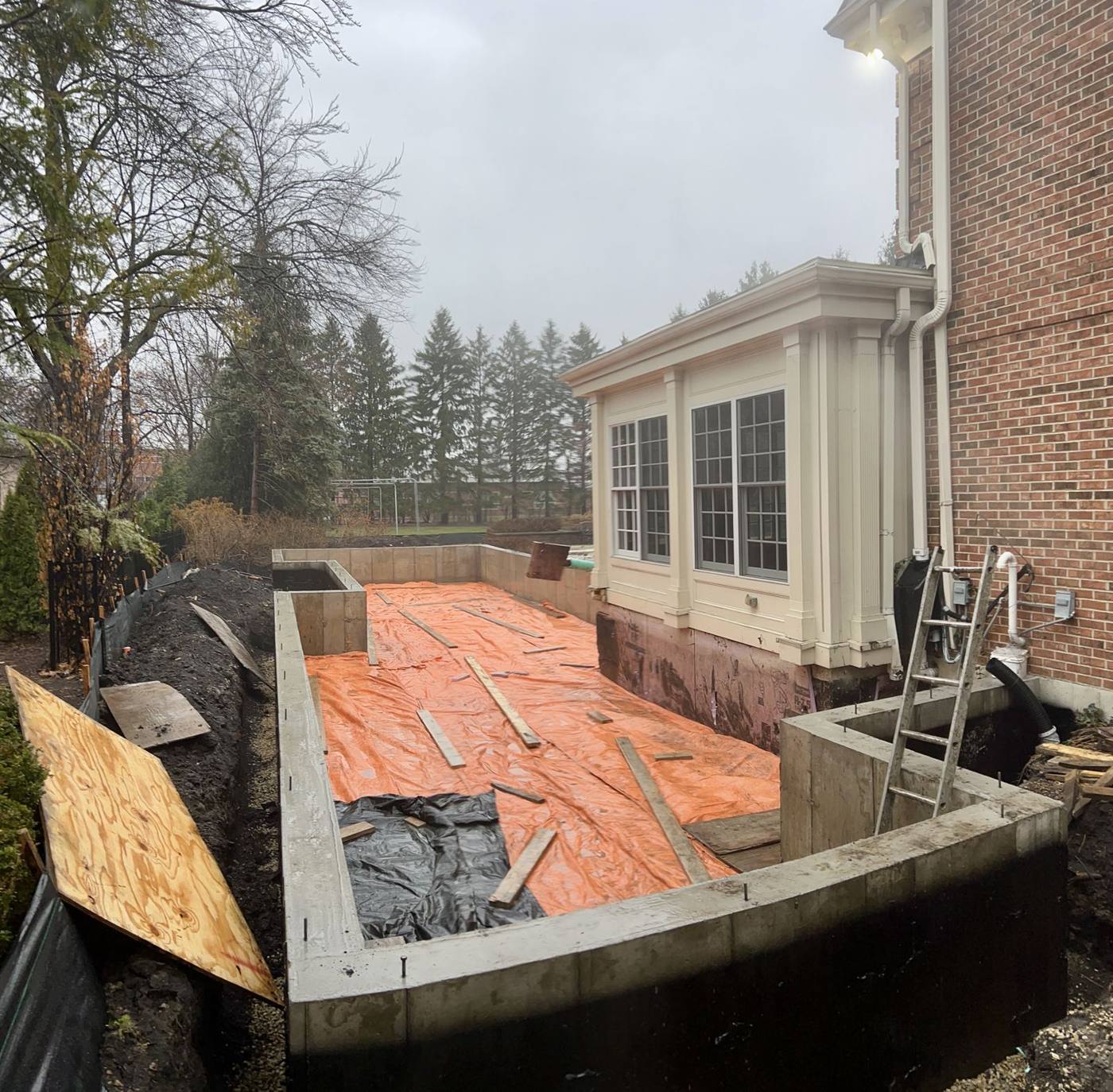 After · Dec 28
The walls were in, damp proofed and wrapped by December 28th, about 25 days on site. Nothing came back. No callback, no crack, no fix. The builder and the homeowner were both happy, and Abel is back on the lot now for the concrete stoops and the patios out back.